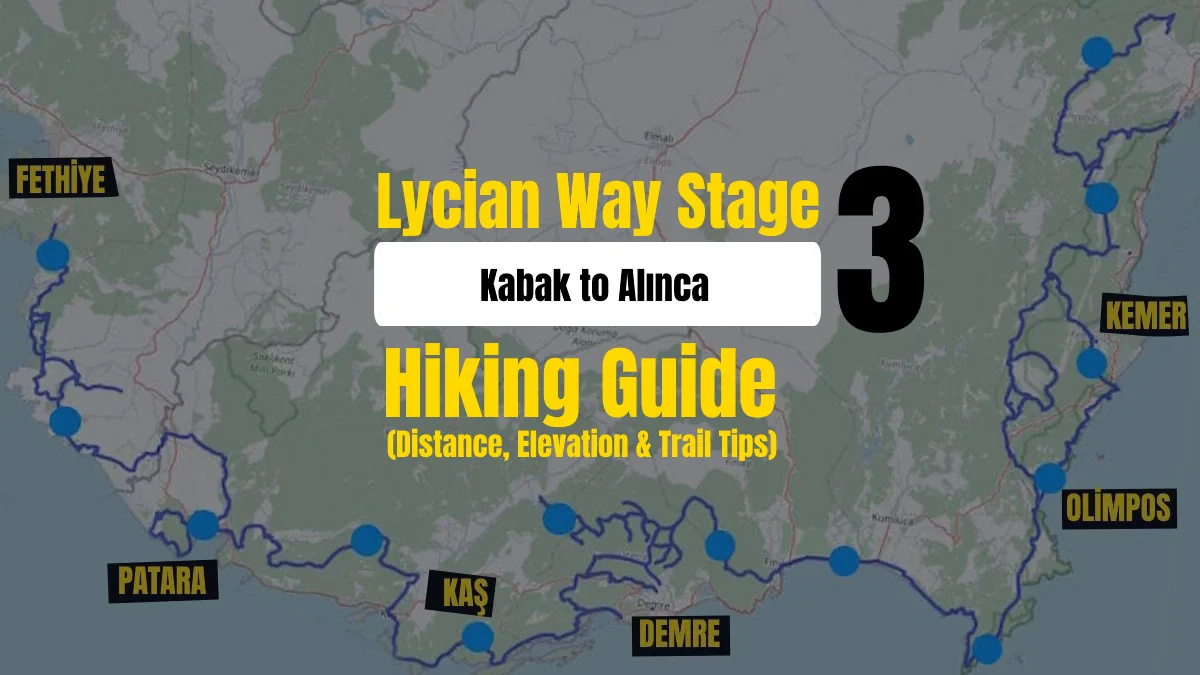
When I started walking from Kabak to Alinca, I must admit, I did not expect it to be this difficult compared to the first two stages. A constant state of climbing, searching for a way on rocky paths, fatigue sinking to the knees. This route, which is a little away from the sea view and in deep silence, will seem very deserted if you walk alone. There’s a place selling drinks up the hill. If you have arrived there, we can say that you have one last hour left. Pitch your tent in that famous facility in Alinca, and enjoy dinner with the magnificent view.
Lycian Way Stage 3 Overview: Distance, Elevation & Difficulty
The third stage of the Lycian Way takes me from Kabak to Alınca along one of the route’s most dramatic coastal sections. The trail covers approximately 14–16 kilometers, depending on the route variation, and usually takes 6–8 hours to complete.
The stage begins near sea level in Kabak and climbs steadily toward Alınca, which sits at roughly 1,200 meters above the Mediterranean. The total ascent is substantial, with steep and rocky sections along the way. I rate this stage as challenging, especially in hot weather or with a full backpack.
The reward is constant scenery: pine forests, rugged cliffs, deep valleys, and wide views across the turquoise coastline. This is not a stage I rush. I leave early, carry enough water, and allow extra time for steep climbs and navigation.
How to Get to the Starting Gate
Kabak is located near Faralya, south of Ölüdeniz. From Fethiye, I usually take a local bus or minibus toward Ölüdeniz and continue to Faralya. From there, taxis or local minibuses can take hikers down to Kabak Valley.
The exact trail entrance can vary because of road changes, private properties, and route diversions. I check my offline map before setting out and confirm the starting point with local accommodation owners. Some paths begin near the lower valley, while others connect from the village or upper road.
If I am staying in Kabak, I ask for directions the evening before and start as early as possible. The first climb can feel demanding under the midday sun.
Route Description: Step-by-Step
I begin by following the marked Lycian Way out of Kabak. The trail quickly leaves the valley and enters pine forest, where the shade offers temporary relief from the heat. The path is uneven, with loose stones and exposed roots, so I watch my footing carefully.
The route then climbs through forested slopes and open hillside sections. As I gain elevation, the views over Kabak Bay become wider. I often stop briefly here to drink water and adjust my backpack before the steeper sections.
The trail continues toward Alınca across rugged terrain. Some parts follow narrow tracks above the coast, while others pass through woodland and rocky gullies. Red-and-white trail markers appear on rocks, trees, and walls, but they can be easy to miss at junctions.
Near the final approach, the route becomes more open and climbs toward the Alınca plateau. The last ascent is tiring, particularly after several hours on the trail. Once I reach the village, the cool air and sweeping views make the effort worthwhile.
Before hiking, I download a GPS track and save the route offline. I do not rely only on painted markers, especially where newer roads or side paths intersect the trail.
Water Sources & Resupply Points
Water is one of the most important considerations on this stage. Reliable sources can be limited, seasonal, or difficult to identify. I carry at least 2.5–3 liters per person and more during the summer.
Kabak has shops, cafés, and accommodation businesses where I can stock up before departure. Alınca may also have basic supplies or guesthouse facilities, but availability changes throughout the year. I never assume that a village shop or spring will be open.
Natural springs may appear along the route, but I treat untreated water cautiously. I use a filter or purification tablets and ask locals whether the source is currently safe. Water found in open containers should be avoided unless its origin is clear.
Accommodation & Wild Camping
Kabak offers many places to stay, including guesthouses, bungalows, and camps. Booking ahead is helpful during the busy spring and autumn hiking seasons.
In Alınca, accommodation is more limited but typically includes simple village guesthouses or family-run pensions. I contact hosts in advance when possible, particularly if I am arriving late or hiking outside the main season.
Wild camping requires care. I choose a discreet, durable surface away from homes, roads, water sources, and cultivated land. I ask permission before camping near private property and follow a strict leave-no-trace approach. Fires should be avoided because dry vegetation and strong winds create a serious risk.
Practical Tips & Safety Notes
I start before sunrise or early in the morning to avoid the strongest heat. A hat, sunscreen, breathable clothing, and sturdy hiking shoes make a noticeable difference.
The trail includes steep climbs, loose rock, and exposed stretches. Trekking poles improve balance, especially on descents. I keep my phone charged and carry a power bank because there may be limited reception.
Weather can change quickly in the hills. I check the forecast before leaving and avoid the route during thunderstorms, extreme heat, or strong winds. After heavy rain, rocky sections may become slippery and streams can rise suddenly.
I carry basic first-aid supplies, food for the entire day, water treatment equipment, and an offline map. I also tell someone my route and expected arrival time. If conditions deteriorate, I turn back rather than continuing toward unfamiliar terrain.
Frequently Asked Questions
How long is the Kabak to Alınca stage?
The route is approximately 14–16 kilometers, depending on the chosen trail variation and starting point. Most hikers need 6–8 hours, including short breaks.
How difficult is this stage?
It is a challenging stage because of the long climb from Kabak to Alınca, rocky terrain, heat, and limited water. Hikers should have reasonable fitness and experience with steep mountain trails.
How much water should I carry?
I recommend carrying at least 2.5–3 liters per person. In hot weather, I carry more and refill only at sources confirmed to be safe.
Can beginners hike from Kabak to Alınca?
Fit beginners can complete it with an early start, suitable footwear, careful navigation, and sufficient water. However, the elevation gain makes this stage more demanding than its distance suggests.
Is there accommodation in Alınca?
Yes, Alınca has simple guesthouses and village pensions, although options are limited and seasonal. I arrange a bed in advance whenever possible.
Can I camp along the route?
Wild camping may be possible, but I always ask permission near villages or private land. I camp discreetly, avoid fires, and leave no trace.
Is the trail well marked?
The Lycian Way is generally marked with red-and-white signs, but markers can be faded or hidden. I use an offline map or GPS track as a backup, especially near roads and junctions.